
US Distribution Expansion for High-Temperature Systems
Regional partner alignment accelerates the deployment of high-temperature polymer platforms and validated engineering consumables across domestic production centers.
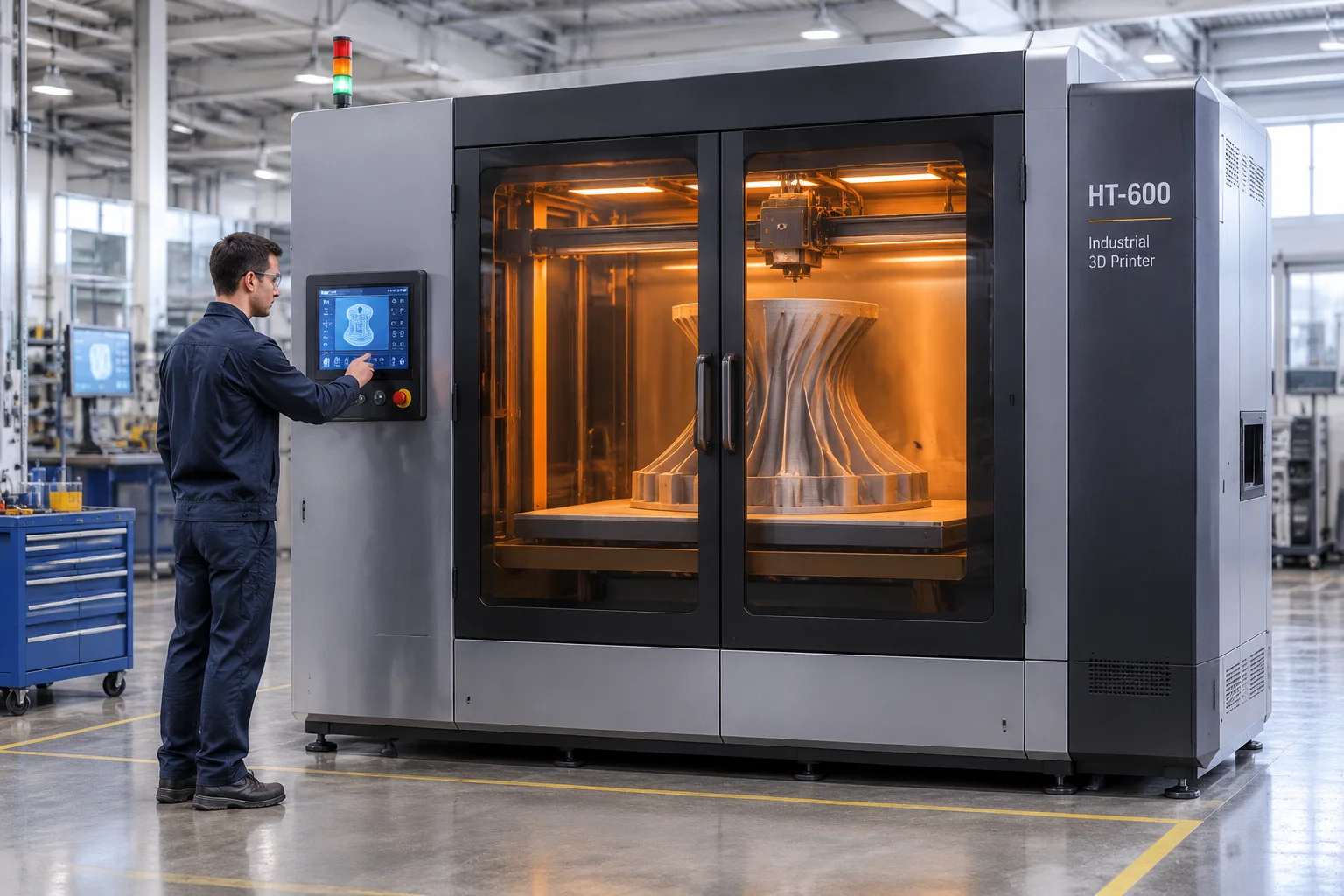
Accelerating Domestic Integration of Thermal Additive Hardware
Industrial demand for high-temperature additive manufacturing platforms has outgrown conventional import channels. The expanded domestic distribution network pairs certified regional systems integrators with localized inventory depots, establishing direct supply lines for aerospace-grade extrusion units, heated chamber peripherals, and specialized filament spools across key North American manufacturing regions.
Operational Baseline and Logistics Specifications
| Parameter | Value / Technical Scope |
|---|---|
| Chamber Temperature Capability | Active convective heat to 250°C |
| Qualified Material Portfolio | PEEK, PEKK, ULTEM 9085, PPSU |
| Regional Support Hubs | Northeast, Midwest, Gulf Coast, West |
| Component Delivery Timeframe | 24 to 48 hours domestic dispatch |
| Field Calibration Protocol | Thermal drift verification under NIST traceable tools |
| Filament Conditioning Standard | Sealed vacuum packs with integrated RH sensors |
- ›Elimination of multi-week overseas maritime freight cycles for mission-critical extrusion assemblies and chamber heating cartridges.
- ›Establishment of regional training facilities for factory-certified engineers working on high-temperature polymer platforms.
- ›Standardized storage facilities maintaining relative humidity below 10 percent for moisture-sensitive high-performance pellets and filaments.
Regional Warehousing and Field Service Alignment
Processing advanced semi-crystalline polymers requires stringent environmental control from pellet synthesis through extrusion. The newly formed channel alliance introduces four central logistics depots equipped with climate-regulated storage. These domestic sites keep continuous stock of validated polyetheretherketone and polyetherimide lines, ensuring research labs and production floors receive materials within uniform thermal tolerances.
In addition to hardware and consumables warehousing, the network establishes dedicated field calibration teams. Technicians equipped with calibrated infrared cameras and thermocouple loggers conduct on-site thermal mapping across the 250°C build volumes, ensuring heating uniformity and bed leveling precision conform to rigorous aerospace structural standards.
Localized availability of high-temperature hardware and dried polymer consumables transforms functional prototyping from a logistics hurdle into an agile operational standard.