
Updated SLS Specifications for Industrial Systems
Standardized engineering parameters for powder bed fusion systems, detailing thermal envelope stability, galvanometer calibration, and material consolidation thresholds.
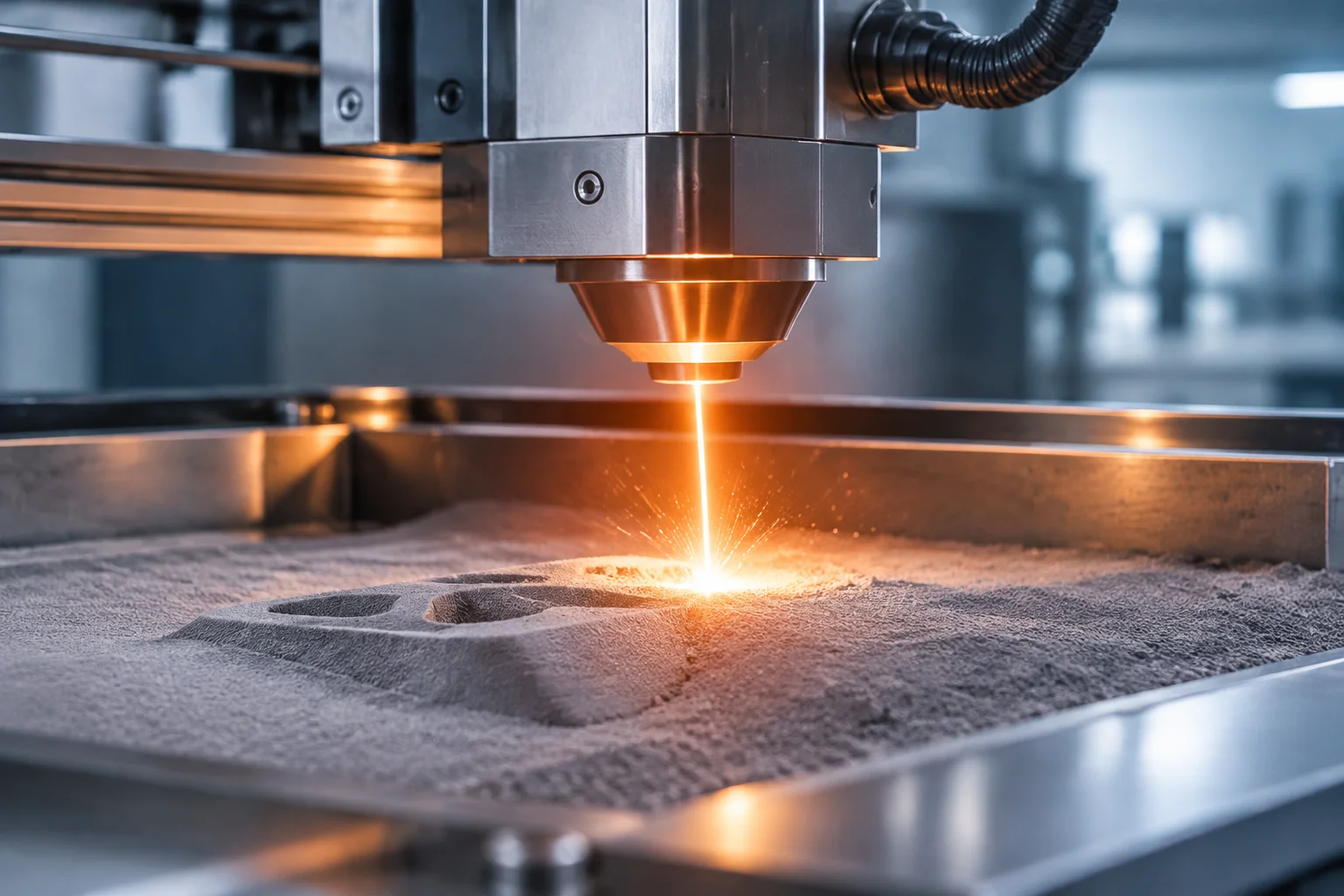
Thermal Equilibrium and Consolidative Scan Windows
Selective laser sintering demands rigorous thermal balance across the build envelope to mitigate boundary curling and maintain uniform structural density. Recent revisions formalize stricter infrared radiant heating limits, dynamic galvanometer vector acceleration, and revised powder cycling ratios. These empirical thresholds eliminate mechanical discrepancies between horizontal and vertical test specimens across multi-day manufacturing cycles.
Standardized SLS Operational Matrix
| Parameter | Value / Technical Scope |
|---|---|
| Chamber Build Envelope Thermal Range | 168.5°C to 173.0°C (±0.4°C spatial envelope) |
| Optical Galvanometer Scan Velocity | Up to 12.5 m/s continuous contouring |
| Laser Focal Diameter (1/e²) | 380 µm with dynamic optical field correction |
| Standard Layer Thickness Intervals | 60 µm to 120 µm (80 µm nominal calibrated) |
| Powder Rejuvenation Blend Ratio | 30:70 Virgin to Recycled in inert N2 atmosphere |
| Dimensional Tolerance Envelopes | ±0.15 mm or ±0.15% across principal axes |
- Preheat cycles must continue until multi-point pyrometry confirms temperature variance under 0.5°C across the bed.
- Counter-rotating roller velocity ceilings must be maintained to prevent compaction waves during layer deposition.
- Unfused perimeter powder must transfer directly to sealed nitrogen vessels to inhibit oxidative polymer degradation.
Powder Cake Density and Heat Dissipation
Thermal stability controls the consolidation boundary between melted cross-sections and the surrounding loose powder cake. When radiant emitters produce localized gradient shifts exceeding one degree Celsius, differential contraction induces warping across extended planar geometries. The updated standard establishes automated feedback compensation via broad-spectrum infrared sensors, adjusting radiant power output within millisecond intervals.
Beyond emitter tuning, the recoating apparatus kinematics have undergone systematic optimization. Regulating counter-rotating blade velocity alongside automated metering hoppers prevents packing density discrepancies across the transverse axis. This mechanical uniformity inhibits micro-void emergence, giving functional prototypes and industrial housings the structural consistency required for demanding mechanical deployments.
Uniform thermal conditioning throughout the powder volume remains the single most decisive factor distinguishing functional production parts from fragile prototypes.