
SLA Robotic Preparation Features
Engineering breakdown of automated photopolymer circulation loops, pneumatic vat indexing, and mechanical build platform transfers in continuous stereolithography cells.
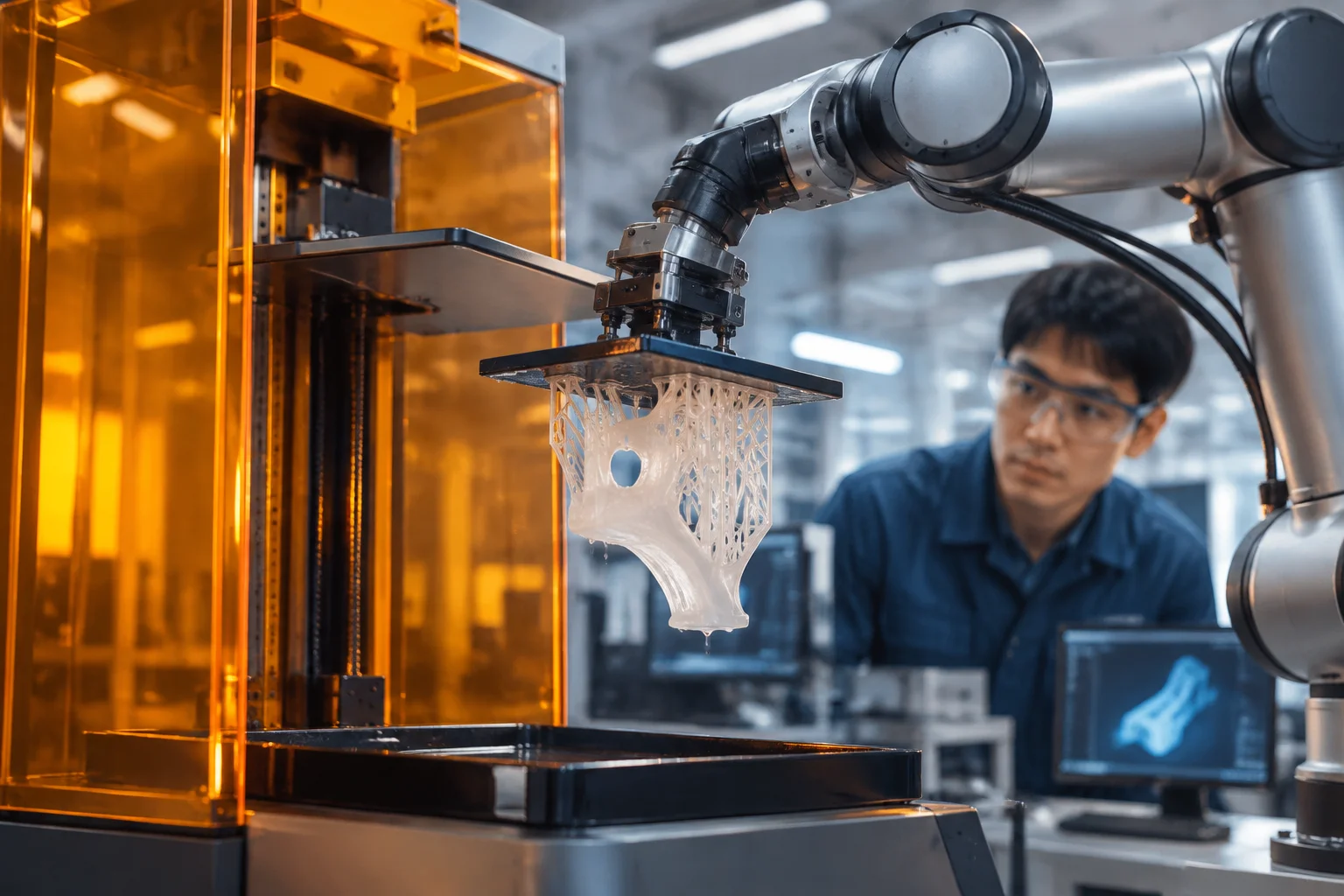
Robotic Preparation Overcomes Manual Vat Interventions
Modern industrial stereolithography setups increasingly rely on automated robotic systems to prepare build vats and handle printed assemblies. By combining inline resin heating, mechanical agitation paddles, and robotic arm grippers, facilities run high-output additive operations without pauses between successive print jobs.
Key Preparation and Mechanical Tolerances
| Parameter | Value / Technical Scope |
|---|---|
| Resin Kinematic Viscosity Window | 180 to 2,400 mPa·s continuous recirculation |
| Autonomous Leveling Precision | ±0.03 mm via closed-loop ultrasonic feedback |
| End-Effector Payload Rating | 28 kg payload with dual mechanical grip latching |
| Vat Temperature Stabilization | 30.0°C ± 0.5°C thermal envelope control |
| Recoater Sweeping Repeatability | ±1.2 μm optical edge alignment confirmation |
| Dry-to-Dry Platform Exchange Cycle | < 95 seconds complete exchange and lock |
- Continuous resin recirculation prevents particle settling in heavily filled composite photopolymers.
- Sensors mounted on mechanical grippers monitor pull-off loads during plate extraction to prevent component warping.
- Dynamic preheating and ultrasonic degassing eliminate bubble formation during rapid material replenishment cycles.
Automated Resin Conditioning and Build Platform Extraction
Continuous vat photopolymerization requires uniform chemical consistency across long runtimes. Automated preparation units combine micro-peristaltic fluid feeds with heated circulation manifolds. The system pumps photopolymer continuously across inline viscosity sensors. When viscosity shifts due to ambient variations, inline heating jackets modulate the liquid temperature to keep surface tension within the target recoating envelope.
After part exposure finishes, the automated handling mechanism executes a multi-stage pull cycle. Robotic end-effectors engage hardened kinematic locating pins on the platform edges. The arm lifts the platform at a pre-calculated angular tilt, permitting viscous surface liquid to drain back into the vat. This automated drip sequence reclaims high volumes of unpolymerized resin before moving the components directly to subsequent solvent wash cells.
Automated material preparation and platform extraction turn stereolithography from an isolated workshop technique into a steady industrial process with minimal batch variance.