
Somos WaterShed White and Deflect 110 Materials
Introduction of new stereolithography (SLA) resin formulations optimized for durable mechanical prototypes, offering distinct white opacity and high thermal deflection profiles.
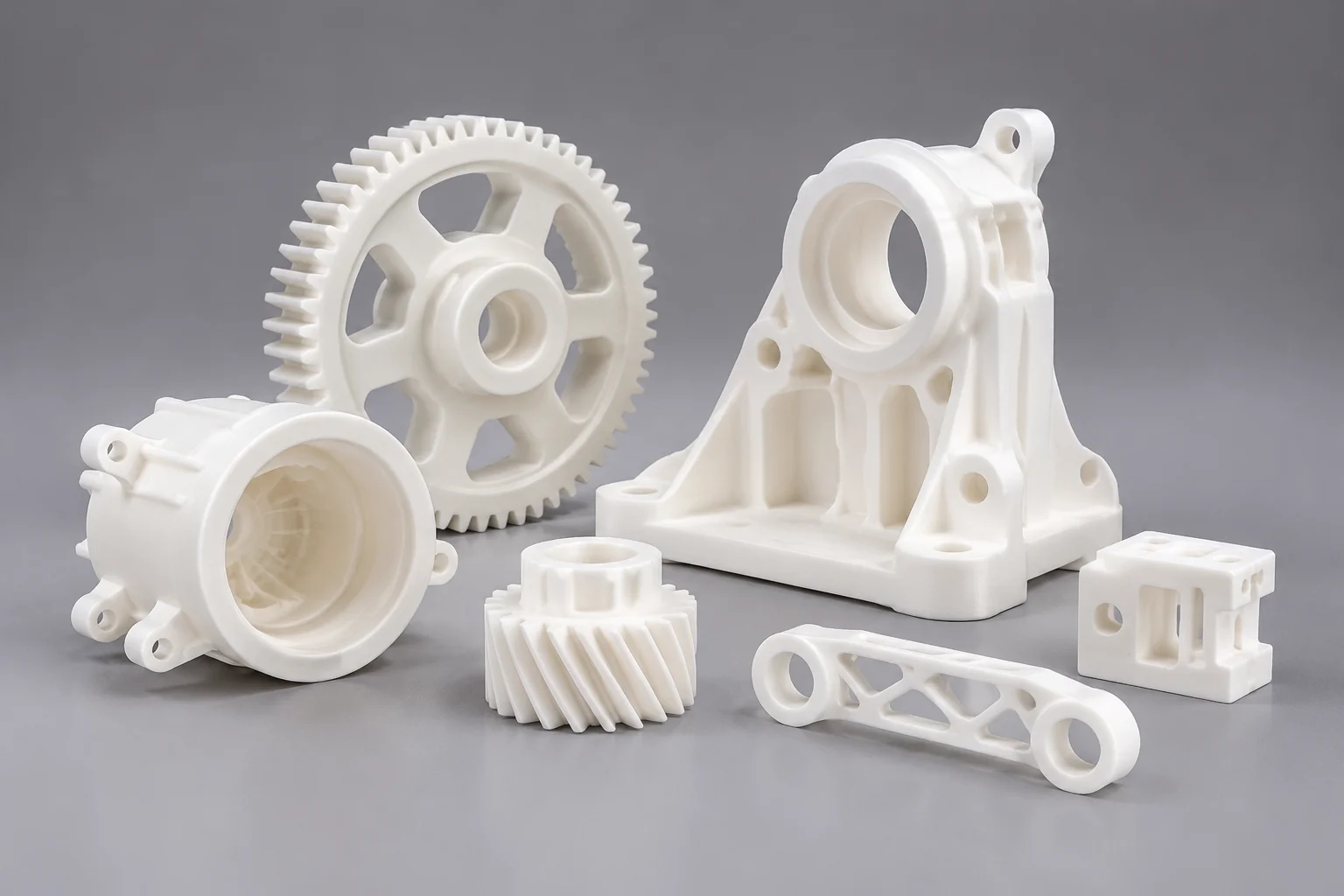
High-Fidelity White Prototypes and Thermal Resistance
The integration of Somos WaterShed White and Deflect 110 into modern stereolithography workflows addresses two critical engineering requirements: visual fidelity and thermal endurance. Somos WaterShed White provides an opaque, smooth surface that mimics traditional thermoplastics, making it ideal for fluid flow analysis, cosmetic parts, and multi-component assemblies. Conversely, Deflect 110 delivers exceptional heat deflection properties, ensuring that complex mechanical prototypes maintain dimensional stability even under rigorous high-temperature testing environments.
Performance and Mechanical Matrix
| Parameter | Value / Technical Scope |
|---|---|
| Tensile Strength (WaterShed White) | 50 MPa |
| Elongation at Break (WaterShed White) | 15-25% |
| Heat Deflection Temp @ 0.46 MPa (Deflect 110) | 110 °C |
| Flexural Modulus (Deflect 110) | 2,800 MPa |
| Viscosity @ 30°C | ~350 mPa·s |
| Standard Build Layer Thickness | 0.05 mm - 0.10 mm |
- Excellent moisture resistance for long-term dimensional stability in humid environments.
- Opaque white formulation eliminates the need for post-print painting on display models.
- Rigorous thermal deflection capacity suits under-the-hood automotive testing applications.
Optimizing the Print and Post-Cure Workflow
Implementing these materials requires precise calibration of your SLA platform. For Somos WaterShed White, operators should focus on optimizing the recoater blade gap and sweep speeds to prevent micro-bubble formation in the opaque resin. The high-opacity nature of the formulation means UV penetration depth is highly controlled, ensuring crisp feature details but necessitating accurate exposure timing to avoid layer delamination on complex overhangs.
Deflect 110 presents a different set of preparation challenges. To achieve the advertised 110°C heat deflection temperature, components must undergo a specific thermal post-curing cycle. Operators extract the printed components, clean them using standard solvents, and expose them to a dual-stage UV and thermal baking process. This cross-linking sequence locks the polymer chains, yielding a robust matrix capable of surviving harsh aerodynamic or automotive testing without softening or warping.
The shift towards these specialized SLA materials completely eliminates the compromise between surface aesthetics and mechanical endurance during our functional testing phases.