
Compact Professional SLS System Compatibility
Comprehensive analysis of benchtop powder bed fusion integration, material qualification for PA12, and chamber packing limits in compact engineering environments.
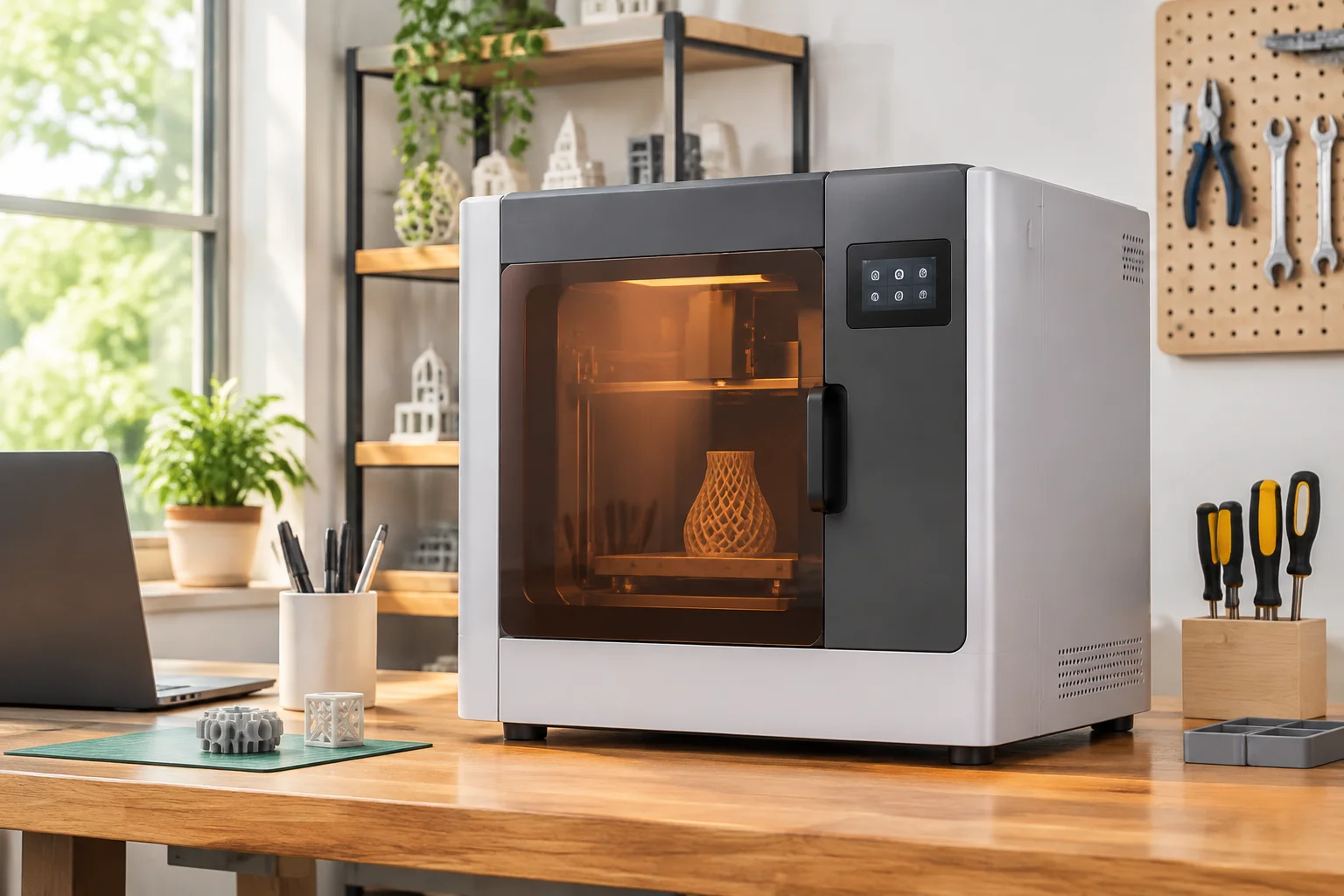
Overcoming Thermal Gradients in Benchtop Powder Bed Fusion
Compact selective laser sintering platforms bring functional thermoplastic manufacturing directly into design studios, eliminating the infrastructure footprint of floor-standing industrial machinery. Miniaturizing the build envelope introduces distinct thermal boundary constraints. Maintaining structural integrity in Polyamide 12 components requires calibrated bed heating zones, regulated powder refresh protocols, and defensive part orientation to suppress boundary curl.
Hardware Specifications and Operational Tolerances
| Parameter | Value / Technical Scope |
|---|---|
| Usable Build Envelope | 165 × 165 × 300 mm (X/Y/Z) |
| Powder Substrate Target | Polyamide 12 (PA12) Spherical Powder |
| Laser Source & Focal Spot | Yb-fiber laser 10W, Ø 200 µm beam focus |
| Layer Thickness Range | 80 µm – 120 µm selectable increments |
| Chamber Surface Preheating | Multi-zone IR radiant array up to 180°C |
| Recommended Refresh Ratio | 30% Virgin / 70% Reusable Sifted |
- Maintain a minimum 5 mm perimeter offset between nested parts and chamber walls to avoid boundary heat loss.
- Utilize progressive laser scanning vectors to distribute localized energy and suppress thermal warping on flat geometry.
- Store PA12 feedstock below 20% relative humidity to prevent moisture vaporization voids during sintering passes.
Chamber Dynamics, Packing Density, and Powder Refresh Economics
The core mechanical challenge in benchtop SLS hardware stems from the high ratio of chamber perimeter surface to active build volume. Large industrial systems leverage massive unsintered powder cakes to buffer thermal drift. Compact units experience rapid edge heat dissipation, requiring responsive infrared preheating elements tied to high-speed surface pyrometer feedback. These sensors hold the PA12 bed inside its narrow crystallization plateau, preventing unwanted curling or premature cake consolidation.
Packing density inside compact chambers operates best between 12% and 18%. Exceeding 20% density concentrates elevated thermal energy in central clusters, causing rough surface textures and uneven shrinkage across successive layers. Implementing a disciplined 30/70 virgin-to-recycled powder blend preserves reliable elongation at break while preventing unnecessary consumable waste during continuous development cycles.
Compact SLS bridges the gap between digital modeling and structural parts only when chamber thermodynamics are rigorously respected during the nesting phase.