
Multi-Build Features in Alpha Slicers
Technical evaluation of multi-platter project trees, dynamic chamber distribution, and split-batch nesting workflows in experimental additive preparation engines.
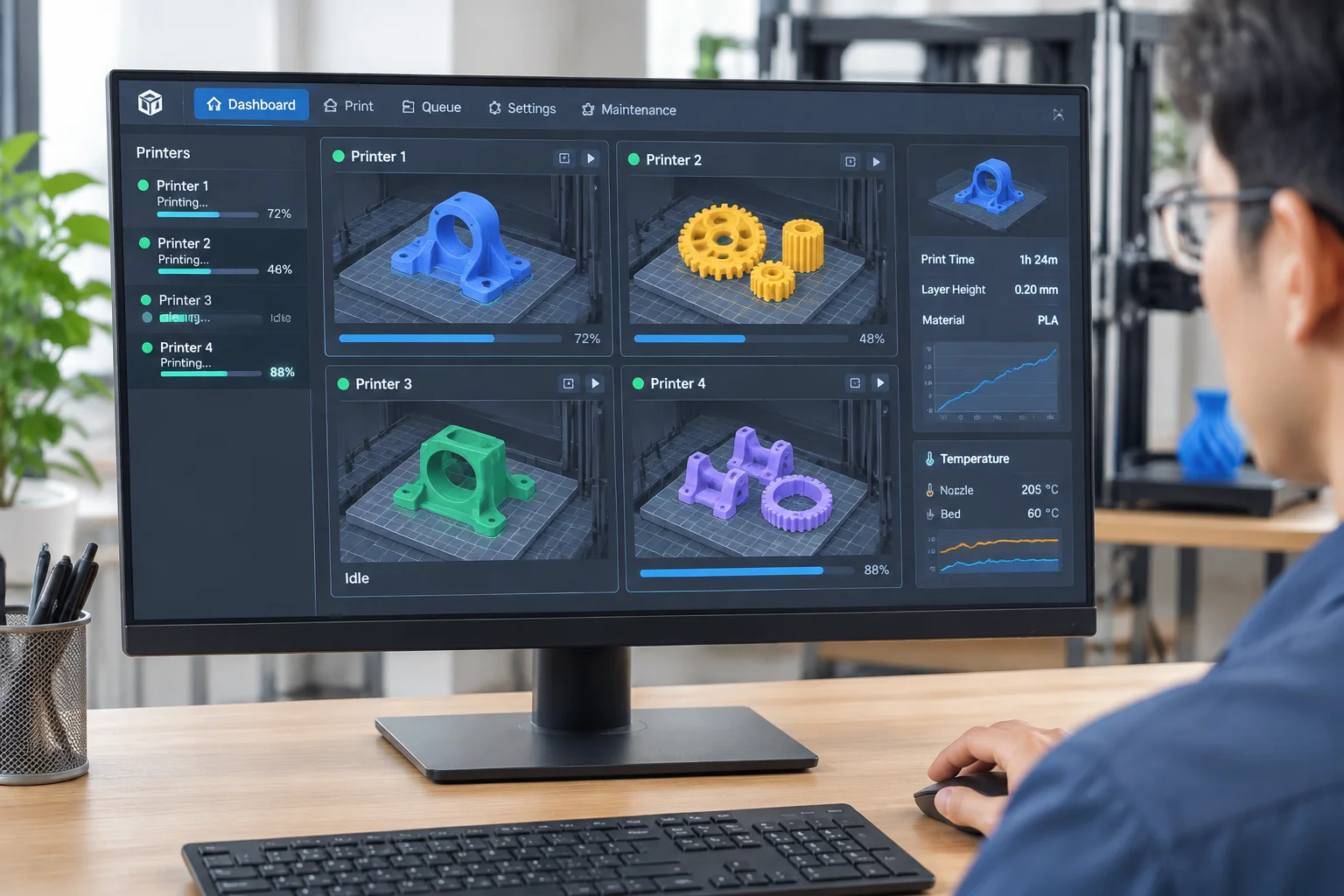
Decoupling Single-Platter Constraints from Complex Assemblies
Contemporary alpha builds of slicing applications are overhauling the conventional one-file-one-platter pipeline. Instead of forcing technicians to export separate disconnected project files for multifaceted assemblies, new virtual plate hierarchies maintain part relationships, shared parameter presets, and continuous slicing queues across multiple consecutive machine runs.
Multi-Build Environment Parameters
| Parameter | Value / Technical Scope |
|---|---|
| Concurrent Build Plates | Up to 16 virtual platters per workspace |
| Parameter Propagation | Global defaults with per-platter parameter overrides |
| Boundary Collision Detection | Automated volume isolation per machine envelope |
| Memory Footprint | Sparse voxel structures minimizing peak system memory |
| Toolpath Export Pipeline | Discrete G-code and CLI outputs with batch manifests |
| Standard Compatibility | Native 3MF Production Extension (ISO/IEC 25422:2025) |
- Workspace trees preserve CAD assembly hierarchies across distinct physical build trays.
- Engines cache unmutated plates, expediting recalculation cycles during minor geometry revisions.
- Fabrication documentation generates concurrently with individual build layer schemas.
Production Efficiencies and Memory Management
Organizing high-part-count additive jobs historically caused workflow fragmentation. Splitting an assembly across four or five print runs meant juggling isolated files. When tolerances changed or thermal shrink values needed tweaking, each file required individual adjustment. Multi-build workspaces solve this challenge by establishing a central assembly coordinator that controls instance transformations across all designated platters simultaneously.
Behind the user interface, updated alpha software utilizes scene graph references rather than deep copies of triangular meshes. When processing a sequence of build platters, background rendering workers operate without locking the main display. This modular layout strategy delivers substantial improvements for prototype iteration and small-batch manufacturing.
Consolidating our segmented prototype runs into a unified multi-build workspace eliminated version drift across our mechanical test assemblies.