
Desktop Resin Print Preparation
Engineering workflow for professional benchtop resin printers, emphasizing support anchoring, suction mitigation, and dedicated VOC extraction protocols.
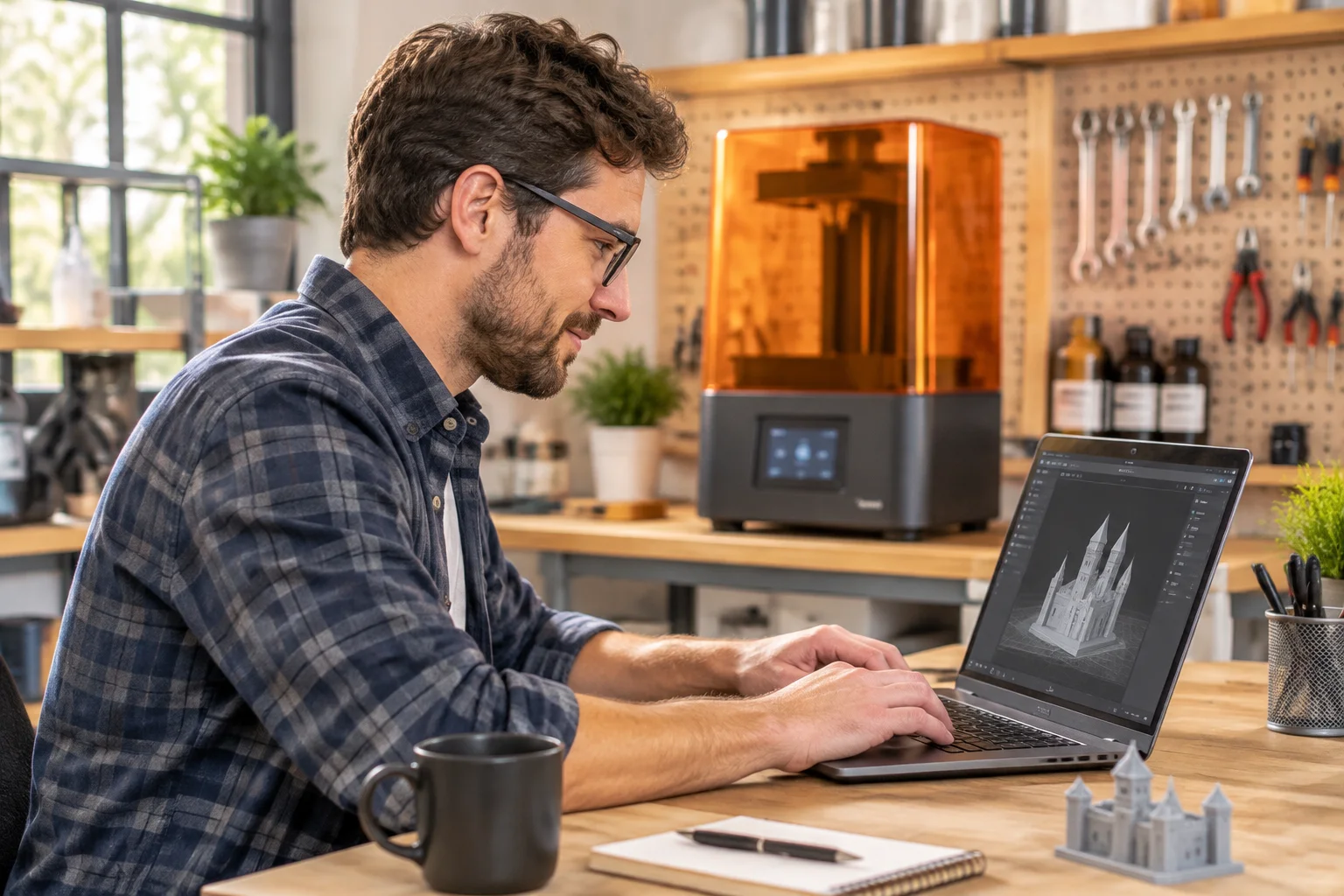
Cross-Section Optimization for Benchtop Vat Systems
Preparing engineering components for desktop stereolithography demands rigorous control over peel forces and vapor management. In enclosed professional environments, digital build setups must coordinate part tilt, support tip density, and suction relief holes with negative-pressure carbon scrubbers to maintain component tolerances and air purity.
Desktop Resin Operational Setup Matrix
| Parameter | Value / Technical Scope |
|---|---|
| Recommended Peel Angle | 15° to 45° off-axis relative to release film |
| Support Contact Diameter | 0.35 mm – 0.60 mm for technical resins |
| Pressure Equalization Vent | ≥ 2.50 mm diameter near base datum |
| Standard Layer Elevation Slice | 25 µm – 100 µm per exposure increment |
| Enclosure Airflow Extraction | 45 to 60 CFM negative pressure flow |
| Resin Vat Thermal Target | 28°C – 32°C closed-loop heating |
- Angle cross-sectional geometry off-axis to reduce instantaneous separation tension against the vat bottom.
- Position paired vent apertures on hollow bodies to prevent internal hydraulic pressure imbalances.
- Confirm active negative air extraction before engaging bottom-layer exposure sequences.
Support Mechanics and Enclosure Air Management
Desktop stereolithography setups separate newly formed resin layers by pulling the build plate upwards against flexible fluoropolymer films. When parts face the vat squarely, immense peel resistance causes localized delamination or complete separation from support anchors. Tilting assemblies between 15 and 45 degrees distributes the cross-sectional area across progressive slices, preserving surface integrity without requiring overly dense support contact points.
Simultaneously, active carbon filtration loops must run continuously throughout preheating, printing, and post-cure transfers. Monomer vapors accumulate rapidly inside compact housings when resin temperatures reach 30°C. Integrating high-static-pressure fans with activated carbon canisters purges volatile organic compounds while keeping the optical chamber dust-free, ensuring predictable laser spot resolution across every print job.
Proper part tilting combined with continuous negative-pressure air evacuation turns volatile desktop resin printing into an exact, workshop-safe manufacturing station.